Why We Built HyperVal - And the Problems We’re Actually Trying to Solve
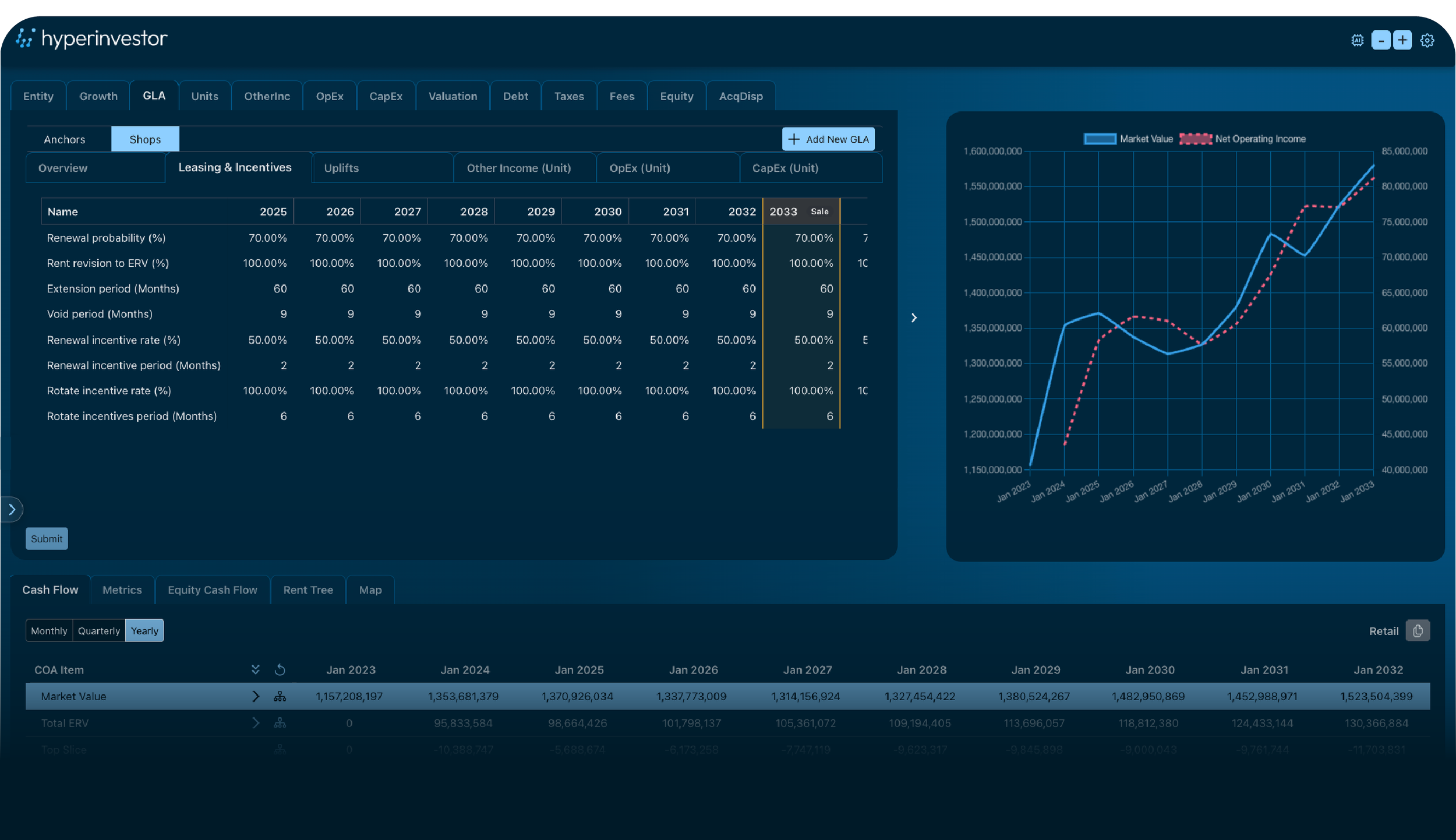
Screenshot of HyperVal
Real estate investment professionals are not short on intelligence, education, or ambition. Many have advanced degrees, decades of experience, and deep market knowledge. Yet a surprising amount of their time is still spent on work that adds little strategic value: updating models, reconciling assumptions, tracking down the “right” spreadsheet, or rerunning analyses just to answer straightforward questions.
We’ve lived inside that reality.
Before Hyperinvestor, we were part of investment management organizations, responsible both for designing core investment models and implementing them across teams internationally. We built and reviewed models at firms where decisions mattered and where small errors or delays had real consequences. Across those roles, the same structural issues kept appearing.
The problem wasn’t that models were too simple.
It was that they were too heavy, fragile, too disconnected, and too hard to scale across people, assets, and time.
The Gap we Kept Seeing
Investment managers face very different challenges than brokers or appraisers. Fund analysis, portfolio oversight, scenario testing, and ongoing asset management all require consistency across many moving parts. In practice, that work is often spread across dozens or hundreds of spreadsheets.
Answering a basic question like “what changed since last quarter?” can require opening multiple files, retracing assumptions, and manually rebuilding context. Even simple sensitivity analysis can turn into hours of repetitive work.
That’s not a tooling problem in isolation.
It’s an operational problem.
And it directly affects decision quality.
Confidence Comes From Structure, Not Speed Alone
When people talk about better tools, the conversation often drifts toward speed or usability. Those matter, but they’re not enough.
In live deals, confidence matters more than anything. Confidence that assumptions are consistent. Confidence that scenarios behave as expected. Confidence that results can be explained to an investment committee or investor without caveats.
What we saw repeatedly was that professionals were second-guessing the mechanics of their own models, not the investment logic itself. That’s a signal something is wrong with the foundation.
HyperVal was built to address that foundation.
A Platform Built Around How Investment Managers Actually Work
We didn’t set out to “replace Excel” or force teams into rigid workflows. Instead, we focused on how investment organizations operate at scale.
Larger firms achieve efficiency through structure: shared assumptions, standardized processes, and clear separation between research, underwriting, and portfolio oversight. Smaller firms often have agility but lack that institutional backbone.
HyperVal is Designed to Bridge That Gap
By keeping assumptions centralized, models consistent, and data structured, teams can spend less time maintaining files and more time testing scenarios and interpreting outcomes. Analysts don’t need to understand how someone else built a model to work with it. Research teams can provide house views without endless email chains. Asset-level changes can be traced through to fund-level impact immediately.
From Static Models to Ongoing Decision Support
A recurring limitation of traditional models is that they assume too much stays constant: renewal probabilities, vacancy assumptions, incentives, exit parameters. In reality, these change as assets are actively managed.
HyperVal was designed to support that reality.
Instead of locking assumptions into static timelines, the platform allows them to evolve over time. That makes it possible to test not just a base case, but how different asset management strategies play out under changing conditions - recessions, operational improvements, or shifts in market dynamics.
The result is not just more scenarios, but better ones.
Less Repetition, More Insight
One of the clearest inefficiencies we observed was how much highly trained talent was spent on repetitive analysis. Sensitivities run manually. Numbers copied from one model into another. Iterations repeated dozens of times just to assemble a final view.
HyperVal was built to reduce that burden.
By consolidating forecasting, historical performance, and scenario analysis in one place, teams start building a structured dataset over time. That dataset becomes an asset in its own right, enabling deeper analysis, pattern recognition, and more informed risk assessment - whether for a single asset or an entire portfolio.
A Long-Term View
We did not build HyperVal to chase trends or overpromise automation. Our focus is on making financial models more robust, more transparent, and more aligned with how real investment decisions are made.
That means listening closely to users, respecting the complexity of the work, and building tools that support judgment rather than replace it.
If we’ve done our job well, the outcome is simple:
less time spent managing models, and more time spent making better decisions and value add work.